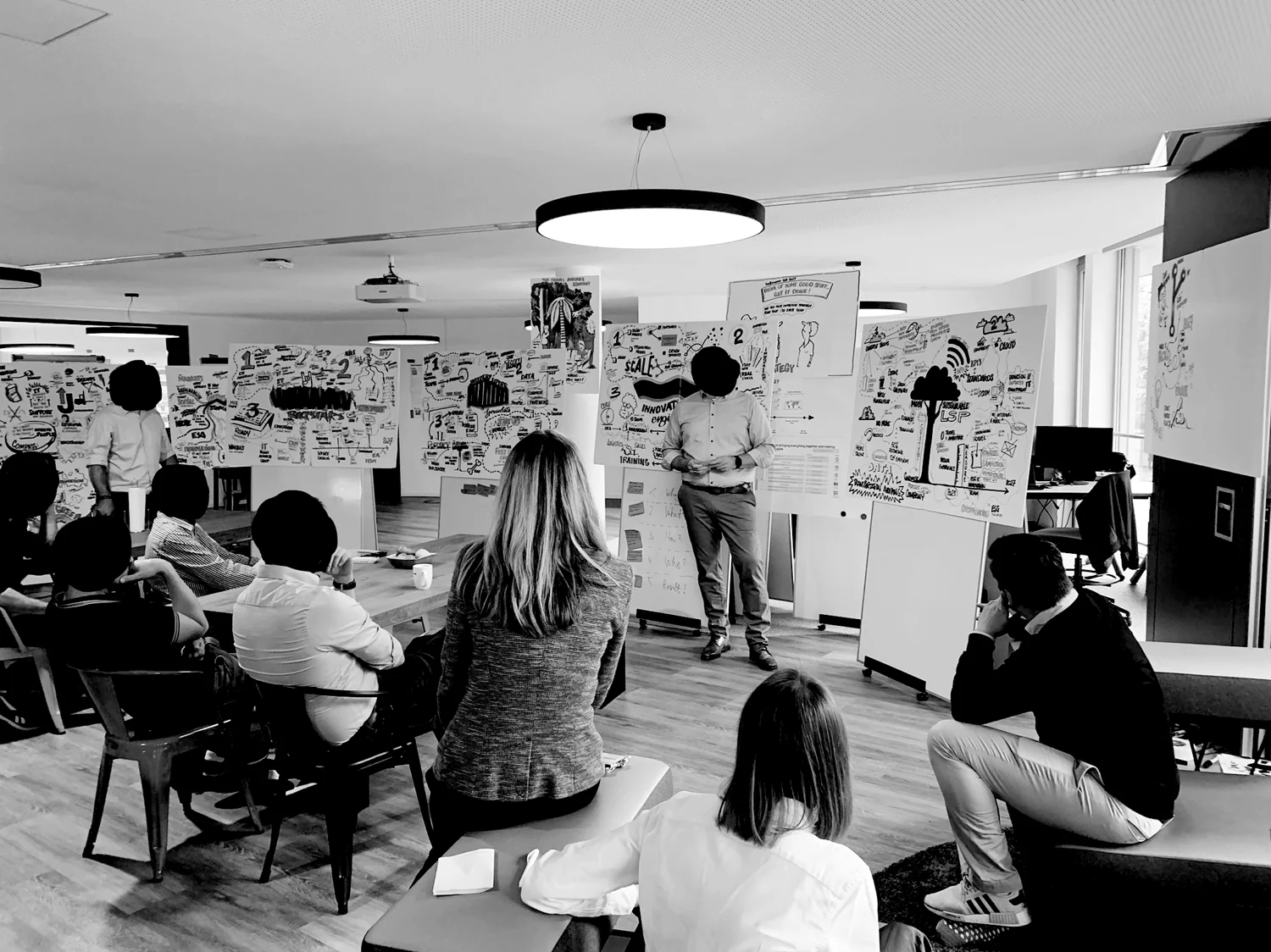
Facilitation & co-design
Designing and supporting strategic conversations, workshops and collaborative processes.
 Visual thinking studio
VISUAL THINKING / SINCE THE EARLY 2000s
Visualification creates the conditions for people to think together, and the images that help their ideas take shape.
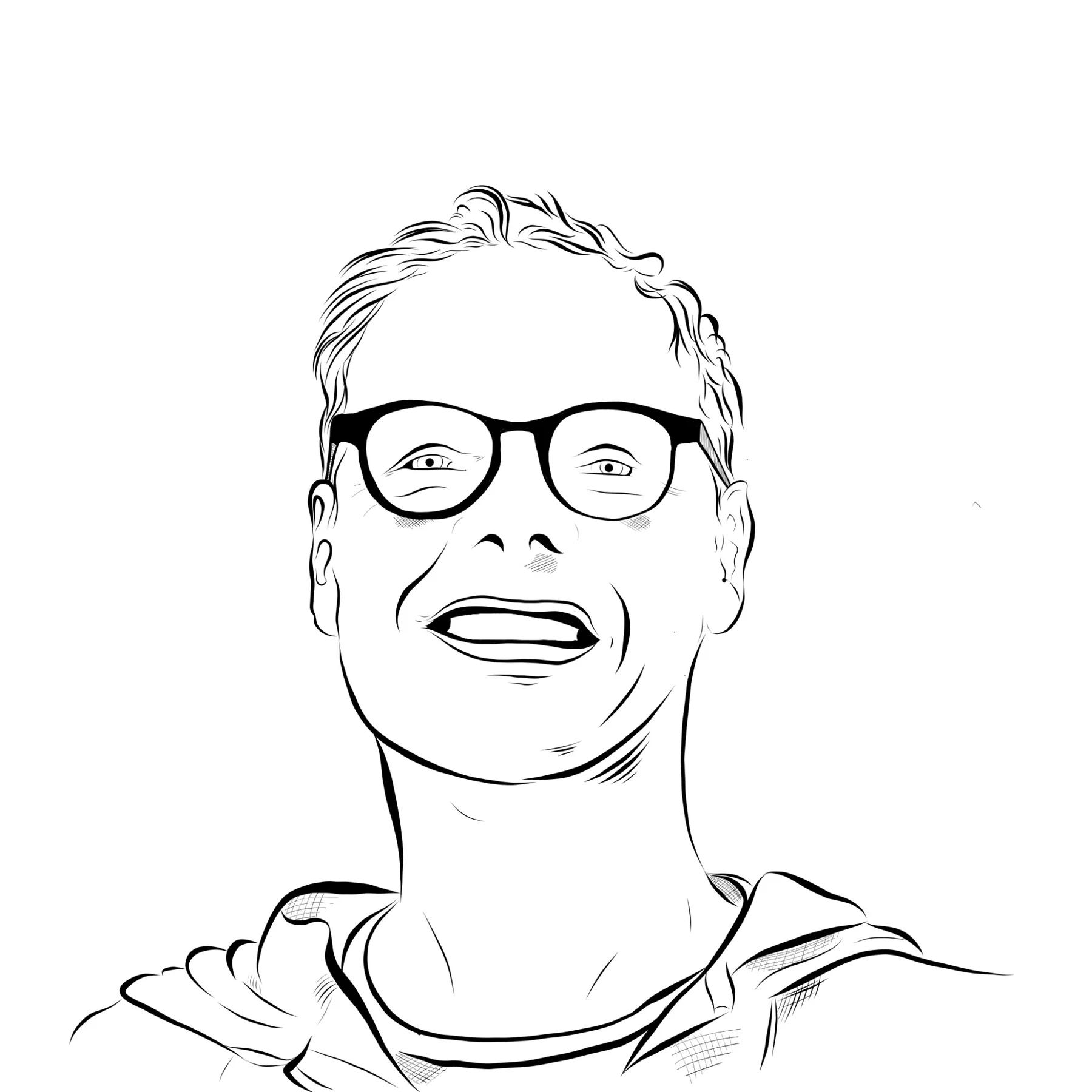
I’m a visual facilitator, illustrator and designer. For more than twenty years, I’ve worked where people, ideas and complex questions meet, translating conversations and knowledge into images that make sense.
My practice grew out of collaborative workshop environments, including Capgemini’s Accelerated Solutions Environment in Paris and the MG Taylor approach to designing group processes. Since then, I’ve worked internationally with organisations, consultancies, researchers and NGOs on strategy, transformation and communication.
I draw live during conversations, co-design and support workshops, and create illustrations, infographics and publications. Depending on the project, I work independently or together with facilitation and creative partners.
With The Humboldt Syndrome, I’m broadening the spectrum of my work beyond the workshop room. Rooted in an incurable curiosity about the world, it brings travel, observation, watercolour and visual storytelling into my practice, exploring people, places and cultures through the art of seeing.
Listening, drawing, responding to the room. These photographs show some of the moments behind the finished images — and the people who make the conversations happen.
A few moments from many rooms, workshops and conversations.
A drawing can make room
for another point of view.
Drawing is a way of listening. When ideas become visible, people can follow a discussion, see connections, question assumptions and contribute while the conversation is still unfolding.
That’s what interests me: not images for decoration, but visual work that encourages attention, understanding and participation.
Designing and supporting strategic conversations, workshops and collaborative processes.
Drawing ideas, relationships and decisions as they emerge in the room or on screen.
Turning complex topics into clear, expressive images, diagrams and visual narratives.
Bringing stories, research and expert knowledge into publications, reports and books.